


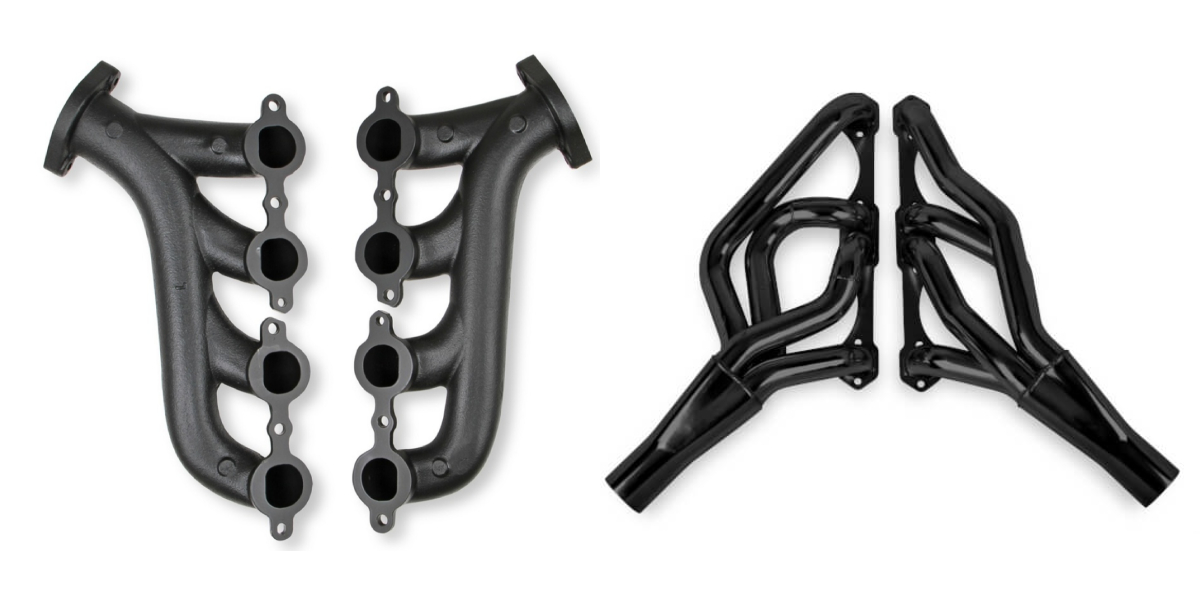
The world of car modifications is one that virtually goes on forever, as the automotive aftermarket offers a massive variety of parts with which to upgrade your ride. When delving deeper into the realm of bolt-on modifications, you will notice that there are two terms used quite often: headers and manifolds. But what exactly are they and how do they interact with one another to produce higher power figures and heightened performance? Below, we will explain each of these components and the benefits associated with them to give you a better idea of which is right for your car. For those looking for some crucial “first mods” to do to their vehicles, exhaust headers and exhaust/intake manifolds can deliver great results in the form of increased power gains and performance. If you still have some questions about headers or manifolds after reading this post, be sure to contact our experts via phone at 1-480-966-3040 or via email at [email protected] for further assistance.
What Are Exhaust Headers?
Visually speaking, headers and manifolds can look very similar because they appear to be a collection of pipes (see featured image above). The main difference between them is that an exhaust header is constructed of a series of individual steel tubes for each exhaust port, while an exhaust manifold is a solid cast iron structure across all of the cylinders. After the headers do their job and the exhaust gases exit the cylinders, they travel to the exhaust manifold. The manifold is an essential source of backpressure because these gases build up pressure from one cylinder to the next before flowing into one pipe toward the catalytic converter. Headers are intended to solve the setbacks associated with this to improve engine efficiency and power. This is achieved by each cylinder getting its own exhaust pipe before coming together in a larger pipe called the collector.
Quality aftermarket headers are designed to give off a scavenging effect so that when the exhaust gas pulse exits the header tube into the collector, negative pressure is produced. This negative pressure wave will then travel back up the tube to the exhaust port during the valve overlap. The negative pressure produced helps pull the leftover exhaust fuels from the cylinder and draws the incoming intake charge into the cylinder. This process delivers great benefits as long as the tubes are long enough for them to prove useful in practical RPMs. That being said, the diameter size of the header tube will directly affect the flow and scavenging. Larger tubes (called long-tube headers) are better suited for high RPMs, while smaller tubes (short-tube headers or shorties) are ideal for maintaining exhaust gas velocity for low-end torque.
Shop All Exhaust Headers Here
What Are Exhaust Manifolds?
The exhaust manifold is the first part of your vehicle’s exhaust system and works to funnel spent exhaust gas from the engine. In short, this part is connected to the engine and collects all of its emissions. It assembles the fuel/air mixture from each cylinder and, in addition to receiving all of the burnt engine gases, completely burns any unused or incomplete burnt fuel using very high temperatures. The manifold is comprised of the first oxygen sensor in the exhaust system in order to keep an eye on the amount of O2 entering the system. The oxygen sensor will also communicate with the fuel injection system to either increase or decrease the amount of oxygen used in the fuel/air mixture that is used to produce power for the engine. In other words, the exhaust manifold can be viewed as a funnel that collects emissions and once they are in place and burnt, sends all of that into the rest of the vehicle’s exhaust system.
Some exhaust manifolds are made of cast iron, while others are constructed of stainless steel or ceramic. A performance exhaust manifold can wake your vehicle up and boost low-end grunt for towing and increase mileage when you are cruising. Performance exhaust manifolds are a great bolt-on part that requires very little maintenance. These days, a majority of exhaust manifolds are similar to tubular exhaust headers with attached catalytic converters. They are designed to optimize exhaust flow and give your ride better fuel economy and additional power. For those seeking a balance of leak-free reliability and a boost in performance, you can’t beat an exhaust manifold upgrade.
Shop All Exhaust Manifolds Here
What Are Intake Manifolds?
The roles of an intake manifold are threefold. It distributes the fuel/air mixture into the intake ports of the engine’s cylinder heads. It acts as a solid mount for your vehicle’s fuel injectors, carburetor, and other engine parts. And, it is one of the components of a vacuum system that generates power for cruise control, ignition advance, and power-assisted brakes. Unlike the exhaust manifold that processes burnt fuel, an intake manifold processes raw fuel. When the engine begins its intake stroke, pistons move down to create a vacuum that fuels the mixture into the cylinder. The piston then moves upward to compress the mixture until a spark ignites it. The resulting explosion drives it down again to begin the next cycle.
In some automobiles, the intake manifold is made of cast iron or aluminum. This is because both metals are great at resisting heat without melting or warping the material. Some newer cars now even use intake manifolds crafted from composite plastics. Replacing a vehicle’s intake manifold isn’t nearly as popular as it was at one point. That’s because these days it is generally more beneficial and simpler to merely replace the intake box and tube assembly instead of the manifold itself. Intake manifolds play a huge role in providing the structural base for a car’s fuel injection system. When your engine is fed more fuel and air, it is consequently able to produce more power. So, a high-flowing intake manifold is crucial if you are looking to make big horsepower and torque numbers.
Shop All Intake Manifolds Here


Need a manifold or header for a v6(308C30) cj7 keep. Not sure which is best for my keep. Any advice?
Will have one of the guys email you.