


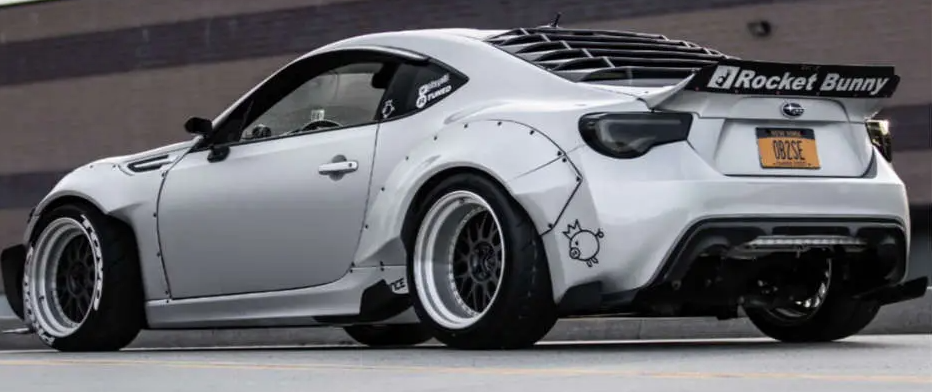
This is one of the most searched automotive questions on the internet. What is offset?
There are plenty of tutorials, articles, videos and more on what this question means. It seems like a pretty straight forward question with a pretty straight forward answer, right? Wrong!
There are plenty of intricacies when it comes to the sizing of your car’s wheels, the 4 main ones being diameter, width, offset and backspacing. And unfortunately, wheel manufacturers can do some funky things that might not always yield you the result you want when buying wheels. That’s why it’s important to get as specific as possible with every single measurement you can before you install a new set of wheels. Check out the video for a visual demonstration, otherwise read our summary below.
What is Offset?
Offset is the measurement, in millimeters, between the center line of your wheel and where the mounting surface of the wheel is. If your wheel has a 0 millimeter offset, that means the mounting surface of your wheel matches the exact center of your wheel’s barrel.
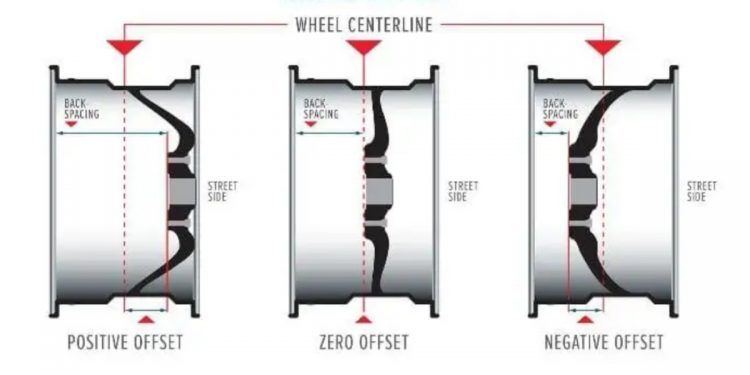
There are two terms that will be used to describe your wheel offset. Positive offset and negative offset. Here’s where people get confused, so we’ll make it as clear as possible for you to remember.
A positive offset means the mounting surface of your wheel is moved to the street facing part of your wheel barrel. This in turn will push the rest of your wheel’s barrel into your car. A common thing to look out for when running a positive offset is clearance issues. Sometimes people will get too aggressive with a positive offset, and the back of the barrel will push into your suspension parts, brakelines, coilovers, and cause a ton of problems.
Most if not all modern cars, especially front wheel drive cars, run a slightly positive offset. This allows for the wheels to be tucked into the fender wells more to optimize suspension geometry. If you are running a safe and conservative positive offset, you should be fine with clearance issues unless you have upgraded suspension components that have changed the amount of space you have in the wheel wells.
Now, for negative offset, the mounting surface will move towards the car, pushing the front of the barrel out towards the street. It’s basically unheard of for cars to come from the factory with a negative offset, but if you know a car that does, let us know! Negative offset wheels are usually going to be for performance-related builds, VIP builds, or show car builds.

A negative offset will help with clearance issues on your car or truck if you have upgraded suspension components. This will allow for full clearance so you don’t have any rubbing issues that can lead to damage on the wheel, tire, or anything inside the wheel well. A negative offset can also give you more room to run fatter tires if you are tracking your car, or if you have an offroad build and need your tire to cover more surface area on the ground. A wider stance from negative offset wheels can also give you greater stability for cornering or other aggressive (but safe) driving.
When it comes to VIP builds or show car builds, a lot of people will run a negative offset because of the aesthetics of it. Throwing some crazy poke on a slammed car is a surefire way to get people to react to your car, now whether that reaction is good or bad… Wellllll
So that’s offset. Now let’s talk about backspacing.
What is Backspacing?
Backspacing is incredibly similar to offset. Backspacing used to be the go-to method. It was easier to measure with older cars because there were fewer suspension components to bump into with the back of the wheel.
Offset is measured in millimeters where backspacing is measured in inches. Instead of positive and negative numbers, there is just 1 measurement. To measure backspacing you’ll measure from the back of the mounting surface, to the back of the barrel. An easy way to do this is by getting something flat, and laying it on the back of your wheel, and dropping your measuring tape right in there to the back of the mounting surface. And the point that they meet is the backspacing.
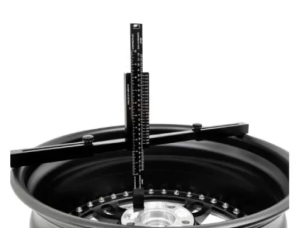
Most modern wheels will only give you the offset measurement, but if you can have both the offset and back spacing measurement, it will help you make the most informed choice possible when purchasing new wheels.
How to Measure Wheel Width & Diameter
Let’s hit the last two measurements that you want when getting a set of new wheels. Diameter and width are the easiest measurements to get, but they will impact what your offset and back spacing is. Now you might think you just grab your tape measure and go top to bottom, but you would unfortunately be incorrect.
You’re going to want to do a little guesswork when measuring the diameter of the wheel. The diameter of the wheel is technically the top of the barrel to the bottom of the barrel. It will be easier to measure if you’re looking at the side of the wheel. Take your tape measure, try and line it up.
This is also kinda the same deal for measuring the width. Instead of just going furthest point to furthest point. You’ll want to measure bead seat to bead seat. On some wheels there will be a bead knurling that looks like a bunch of little grooves, and that will make finding the bead seat easier for you.
The width of a wheel has an incredibly important relationship to the offset of the wheel. Say you have a stock 18×10 wheel with a +20 millimeter offset, 18-inch diameter, and 10-inch width.
You might look at your car and go, “Huh? That flush fitment is ugly. I want to get a tucked or poked fitment with my wheels, and you decide to look for bigger wheels than stock. You find a dope set of 19×11 wheels with a +20mm offset. Same offset right?” WRONG!
Offset is relative to the wheels. A +20 millimeter offset on a wheel with a width of 11 inches will push the barrel another half inch back into your wheel wells as opposed to a +20 millimeter offset on a wheel with a width of 10 inches.
Everything with aftermarket wheels is a game of balance. You change one number, the other numbers have to change. Your job is to figure out if the wheel will fit how you want and if it will fit if you’ve done any extra modifications to your car.
It’s a tough job, and that’s why our friends over at Fitment have built an insane gallery where people have uploaded anything and everything under the sun. You can find your car’s exact make and model and look at all the different sizes people have run on their car. They cover everything from the brand of wheel, make of wheel, diameter, width, backspacing, offset, what other mods are installed on the car, spacers, EVERYTHING. It is the most comprehensive aftermarket wheel database on the internet.
Check out the Fitment Industries Gallery
We know there’s a lot of content out there covering this exact topic, so we hope we taught you something new. And if you are a beginner in the car scene, we are happy to have you!
If you are looking for a new set of wheels for your car and don’t know where to start, head to our website, at vividracing.com to find what you’re looking for. If you’re unsure where to start, we have a ton of performance specialists that will walk you through the process, and get situated with the right fitment for your needs. You can call us from 9-5 during the week at 1-480-966-3040. We’ll be ready for you.

