


Sometimes, just a little bit of horsepower makes a big difference. For instance, imagine putting your car on the dyno and having it put down 398 wheel horsepower. Or, in racing instances where every trick and tweak matters because you can only perform so many legally, a few extra ponies could actually be a difference maker. So, what are your options? Well, one potential solution is spark plug indexing.
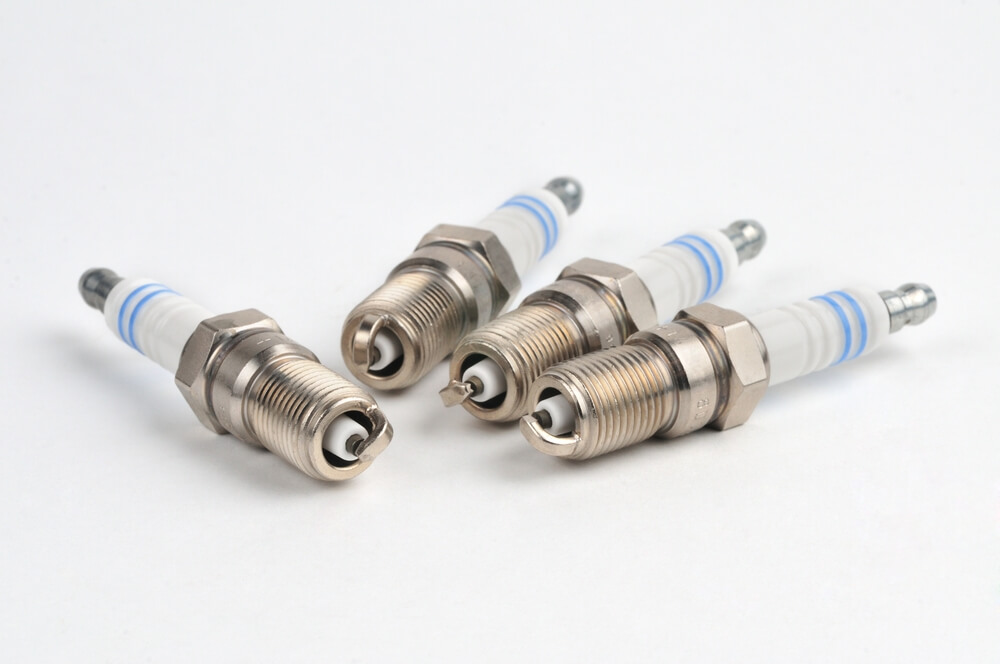
Unlike spark plug gapping, which adjusts the distance from the point to the ground strap, spark plug indexing ensures the ground strap is out of the way, allowing for the best possible ignition scenario, leading to more efficiency, potentially better throttle response, and even a little power. Here’s what you need to know about spark plug indexing.
What Is Spark Plug Indexing?
Spark plug indexing is the process of installing spark plugs so the ground strap (or ground electrode) is aligned toward the intake valve (not the exhaust valve) in the combustion chamber. By using spark plug indexing washers, modders, racers, mechanics, and techs can fine-tune their plugs’ orientations to optimize how the spark ignites with the incoming air-fuel mixture.
The goal of spark plug indexing is to reduce the spark plug ground strap’s obstruction and give the flame front the clearest path to expand across the chamber. In some highly-tuned engines, this can lead to a cleaner burn, improved spark efficiency, and even slight gains in power and fuel economy.
Why Indexing Matters in High-Performance Builds
In a stock engine, indexing plugs won’t make much of a difference. But in high-compression ratio, forced-induction, or high-RPM race builds, the margin for improvement is razor-thin. And, that’s where the benefits of spark plug indexing become far more meaningful.
With these high-performance engines, you’re working with highly engineered combustion chambers, carefully machined heads, and precisely calculated plug gaps. Slight inconsistencies in ground strap position can impact ignition timing, flame propagation, or even contribute to knock (where the fuel ignites prematurely and cause damage).
Perfect orientation of the ground strap ensures the spark jumps toward the intake side of the chamber, giving the flame front a clear path. A misaligned plug can partially block ignition, delaying combustion, raising EGTs, and hurting efficiency. It’s truly a subtle tweak, but one that race engine builders swear by.

How to Index Spark Plugs
Step 1: Mark Your Plugs
Before installing your plugs, mark the open end of the ground strap on the porcelain with a permanent marker. This shows where the open side will face once torqued down.
Step 2: Locate the Intake Valve
Reference your engine prints, do some research, or remove your valve covers to find the intake valve at each cylinder. It’s important to know exactly where to point the plug opening, or the effort of indexing isn’t worth it.
Step 3: Install and Check Orientation
Thread the plug into the cylinder head and tighten it with light torque. Check the mark to see which direction the ground strap faces. The goal is to align it with the intake valve.
Step 4: Use Indexing Washers
If the plug isn’t aligned in the desired position, add or swap out spark plug indexing washers until the orientation is correct. These precision-stamped washers come in various thicknesses to help fine-tune thread engagement without over-torquing or damaging the tapered seat.

Best Practices
- Use the same plug for each cylinder: Differences in threads or depth may require different washers, even on identical engines.
- Test on the dyno: The performance gain may be modest (1–2 hp), but in a race application, that can matter.
- Monitor plug readings: Changes to plug gap, flame path, and voltage requirement can affect how the plug fires under load. These are really only concerns for highly-tuned engines, but can make a difference.
- Don’t index daily drivers: Generally speaking, it’s a lot of effort for minimal gains (unless your engine is already pushing the limit).
Final Thoughts
Let’s be clear: Spark plug indexing won’t magically turn your 400 hp street car into a 550 hp monster. But in a finely-tuned motor where every detail counts, indexing spark plugs can give you an edge.
And best of all? It’s cheap and doable. A set of spark plug indexing washers, a few extra minutes of installation time, and a little bit of patience is all it takes to unlock a more efficient burn and a more responsive engine.

