


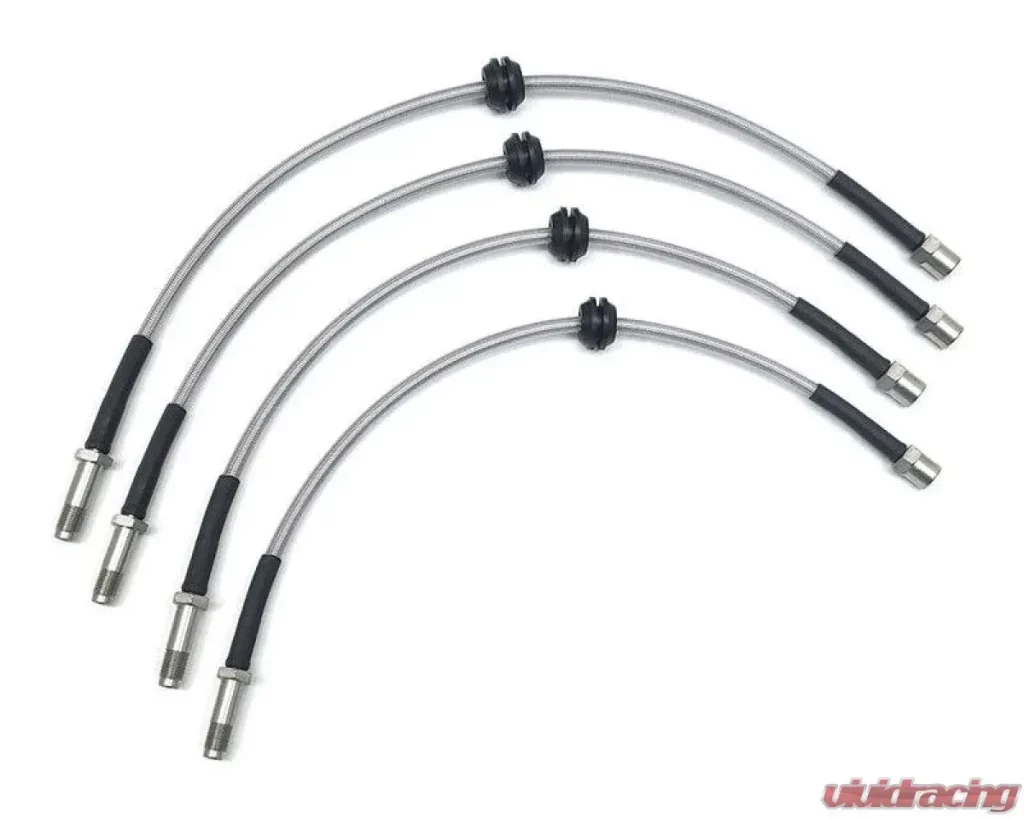
If you’re tired of a spongy brake pedal or just want components that can handle the increased pressure of a performance braking system, stainless brake lines are a great option. Whether we’re talking about the hard lines running from the master cylinder to each wheel or the flexible lines that attach to the brake calipers, stainless steel brake lines are an upgrade well worth the cost and effort.
In this guide, we’ll tackle a step-by-step stainless brake line installation of a complete kit with pre-bent lines and hoses, and then explain why this could be one of your best peace-of-mind upgrades you perform this year.
Why Upgrade to Stainless Brake Lines?
Stainless brake lines are obviously an upgrade, but how much so? Well, stock braking systems generally come with coated steel brakes lines and rubber hoses. They’re usually fine for standard vehicles for quite a while, but they do degrade over the years, causing corrosion and brake hose expansion. Neither of which are great for consistent brake pressure or safety in general.
Stainless steel makes for much more reliable brake lines. They’re more durable and corrosion resistant, and stainless hoses expand much less, and better overall braking performance. They also last longer and heat up less, allowing for more consistent braking and brake feel over time.
Tools & Parts You’ll Need
Before you start to replace your brake lines, make sure you have the following:
- Stainless steel brake line kit (hoses and hard lines)
- Line wrenches
- Brake fluid (check your owner’s manual)
- Brake bleeder or vacuum pump (optional but does speed up the process)
- Jack, jack stands, and wheel chocks
- Safety glasses
- Rags and brake cleaner
If you’re installing a complete kit of vehicle-specific stainless lines and hoses, you don’t need a brake line flaring tool or line bender. If not, you’ll need to do some customization and these tools will help.

Step-by-Step Installation
1. Lift and Secure the Vehicle
Use a jack and jack stands to safely lift the vehicle. You’ll be working underneath it, and the jackstands will keep it safely off the ground. Remove the wheels to access the brake calipers, hoses, and hard lines.
2. Remove the Old Hoses
Start by removing the old hoses. Disconnect the hoses from the calipers and their connections with the hard lines. Brake line wrenches will provide more purchase and prevent rounding the fittings off. Brake fluid will leak from the connections, so be prepared to catch it with a large cup or pan.
3. Remove the Old Lines
Next, remove the old hard lines. Disconnect them from the master cylinder and carefully remove them from the clips holding them in place. Also, be careful to remove them in one piece if possible, and lay them out on the ground in the orientation in which they were originally installed to make the installation of the new hoses easier to figure out.
4. Install the Stainless Steel Lines
Route the new hard lines through the vehicle into the right locations and place them in their clips for support. Connect them to the master cylinder and tighten them with the line wrench.
5. Install the Hoses
Next, install the stainless steel hoses at each brake caliper. Install them to the caliper first, route them through their clips or retainers, and then attach them to the hard lines with the line wrench.
6. Check the Connections
Before moving on, check the connections to ensure that every fitting is properly connected, tightened, and aligned. The goal is to avoid leaks, snags, or unnecessary bends in the hoses.
7. Bleed the Brake System
Make sure all of the bleeder screws on the calipers are closed and add fluid to the master cylinder. Either use a brake bleeder kit or get a partner to help you.
- Working from the further caliper from the master cylinder, attach a hose to the bleeder screw and place a wrench on the screw.
- Use the bleeder kit or the brake pedal to pump the brakes, and then crack the bleeder screw to drain the fluid.
- Shut the screw and repeat until there are no air bubbles in the fluid.
- Move to the other wheels. You’ll feel a firmer pedal as you go.
Once the brake lines are bled, top off the brake fluid reservoir and check for leaks.
Performance Benefits of Stainless Steel Brake Lines
Upgrading your stainless steel brake lines offers some major upsides over standard brake components. These boosts in braking performance include:
- A firmer pedal feel for better response
- Consistent brake pressure in high-heat or high-pressure driving environments
- A better brake feel in corners and threshold braking
- Improved overall durability against corrosion, abrasions, and rubber hoses
- Reduced instances of failures, leaks, and damage
Final Thoughts
Whether the goal is faster lap times or just a safer, more durable braking system, stainless brake lines are the way to go. They’re a must-have for enthusiasts and a great upgrade for anyone who wants more consistent performance from their braking system. At Vivid Racing, we offer tons of kits for vehicles of all types. Find your kit today.