



Valved exhausts have been around for decades, but only recently have they risen in popularity among enthusiasts. Replacing your stock exhaust is one of the first things enthusiasts do with their car, so what’s the difference between these systems? We’ll show you what sets traditional and valved exhausts apart to help you decide which is the best fit for your mod goals.
What is a Valved Exhaust and How Does it Work?
A valved exhaust is pretty much how it sounds. There is a valve inside the exhaust system, between the catalytic converter and the muffler, that rotates to change the exhaust flow through the system, changing the sound it makes for greater adaptability.
We get it. You don’t want to wake up the neighbors every time you start your car. That’s where valved exhausts come into play. Through a pneumatic or electrical system, the valved exhaust can open and close with the touch of a button. This gives them a big advantage over fixed systems, making them highly valuable for enthusiasts who want that freedom to choose their driving experience.
Are Valved Exhausts Actually Quiet When Closed?
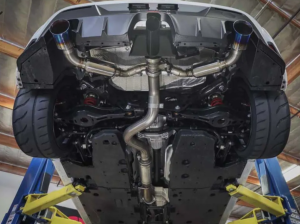
Yes, when valved exhausts are closed, they deliver a quieter pitch, similar to a stock exhaust. This ability to choose between exhaust notes is the key benefit of valved exhausts. Some valved exhausts even allow modified valve positions for a wide spectrum of sound options. There are performance benefits as well. With a valved system, backpressure is reduced so your engine can work smarter, not harder.
Can You Drive a Performance Exhaust Without Annoying Everyone?
Yes, there are performance exhaust systems that are valved, delivering a stealthy exhaust note in the morning and an aggressive growl when you’re cruising down the track. Some prime examples of valved performance systems include:
- Boost Logic Magnum Exhaust
- XForce Varex Valved Cat Back System
- AWE Tuning SwitchPath Exhaust
- Valvetronic Designs Valved Sport Exhaust System
- ARMYTRIX Valvetronic Exahust System
Is a Valved Exhaust Worth the Money Over a Fixed System?
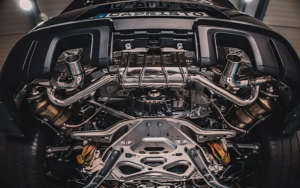
Not all exhausts are the same, so several factors are at play. There are standard, valved, and performance exhausts that offer different experiences and horsepower gains. Axle-backs are cheaper than cat-back systems, which gives enthusiasts cheaper options if they’ve decided on a fixed system. If you’re on the fence, you should know that valved exhausts do come with a premium because of their advanced functionality.
- Fixed axle-back exhausts can range from $400 to over $1,000 for performance axle-backs.
- Fixed cat-backs can cost from $500 to $2,000 because they replace more parts than axle-back systems.
- At the lower end, valved exhausts can start around $1,500 but typically stretch into the $2,000 to $4,000 range.
- For exotic cars, the difference can be even higher, reaching from $4,000 to $8,000.
Shop Valved Exhausts at Vivid Racing
Valved exhausts are awesome systems that deliver the pops, cracks, and growls you want when you rev your engine, while also giving you the choice if you want to keep a low profile in residential areas. See what exhausts fit your setup and decide which exhaust is best for you. Check out our blog for more guides and recommendations, and contact our customer support team with any questions you have about fitment or particular products.
