


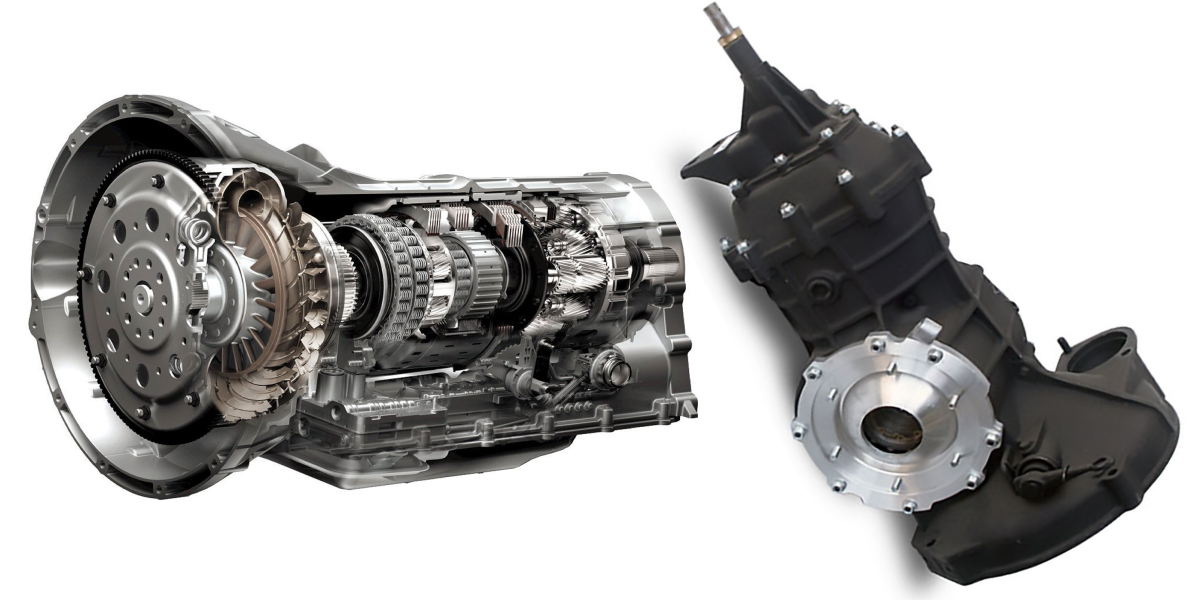
The terms transaxle and transmission are sometimes confused with the latter being used in place of the former. While both components transmit power from a vehicle’s engine to the wheels, they are two different things. Transmissions are usually found in rear-wheel-drive vehicles and serve one purpose: to send engine power to the driveshaft via an array of different gear ratios. Transaxles are used in front-wheel-drive cars and serve the same purpose as a transmission but also adopt the job of the differential – which is a completely separate component on rear-wheel-drive models. Since the axles that drive the wheels (or CV axles) are connected to the transaxle, a power-splitting differential system must be used to allow for proper power distribution to the wheels. In essence, then, a transaxle is a transmission and a differential all in one integrated assembly. Keep on reading to find out more about each of these drivetrain parts, the main differences, and how each system works.

What Is a Transaxle?
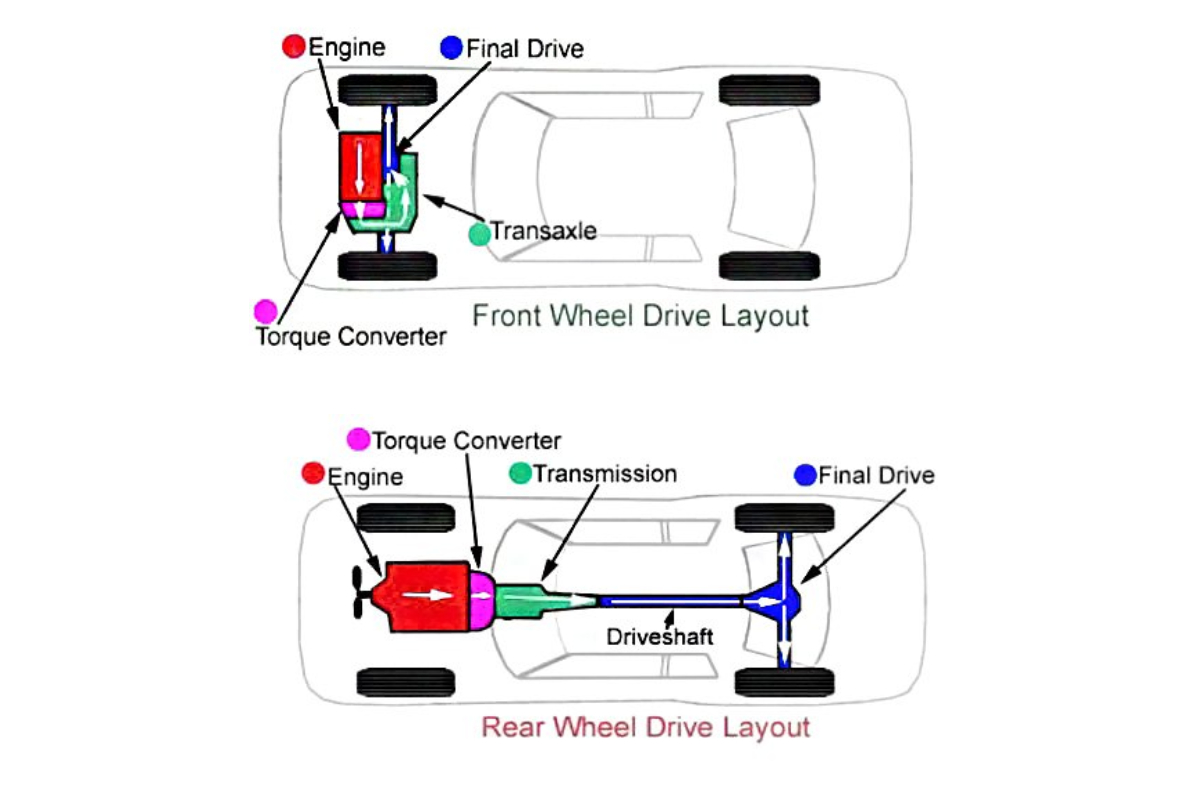
A transaxle is a single unit that combines the gear-changing function of a transmission with an axle and differential. It is basically a smaller version of transmission often found in cars with automatic transmissions. In two-wheel-drive vehicles, transaxles are present in all configurations where the engine is located at the same end as the drive wheels are. This includes front-engine, front-wheel-drive layouts as well as rear-wheel-drive vehicles with the engine located behind the cockpit. For front-engine, rear-wheel-drive performance vehicles, the transaxle is integrated into the rear axle. A benefit of this design is that there is even more front and rear weight distribution to enhance overall handling. In this case, the absence of a separate differential reduces vehicle weight for better performance.
Instead of having the differential at the rear of the vehicle, it is located in the transaxle housing that is mounted parallel to the transmission. This simplifies the driveline since the driveshaft does not have to connect to the diff before power can be sent to the wheels. Most vehicles that have a transaxle will also have a transverse engine layout, which means the engine is mounted with the crankshaft running from left to right. And because transaxle vehicles have fewer drivetrain components, they often weigh less than ones with a transmission.
How Does a Transaxle Work?
The transmission section of a transaxle operates just like a transmission would, but instead of connecting to the rear axle by way of the driveshaft, it contains both the transmission and differential components. When power is applied, the transmission’s output shaft spins a pinion gear that secures to the ring gear on the differential. Power is transferred to the wheels via two axle shafts (or half shafts), connecting the transaxle and the wheels. Transaxles use torque-splitting differentials so that the axle shafts can function at different speeds, which allows the vehicle to corner more effectively. The differentials inside of transaxles usually incorporate four-plus gears, with one gear being connected to each axle and two more attached to the differential pinion shaft.
What Is a Transmission?
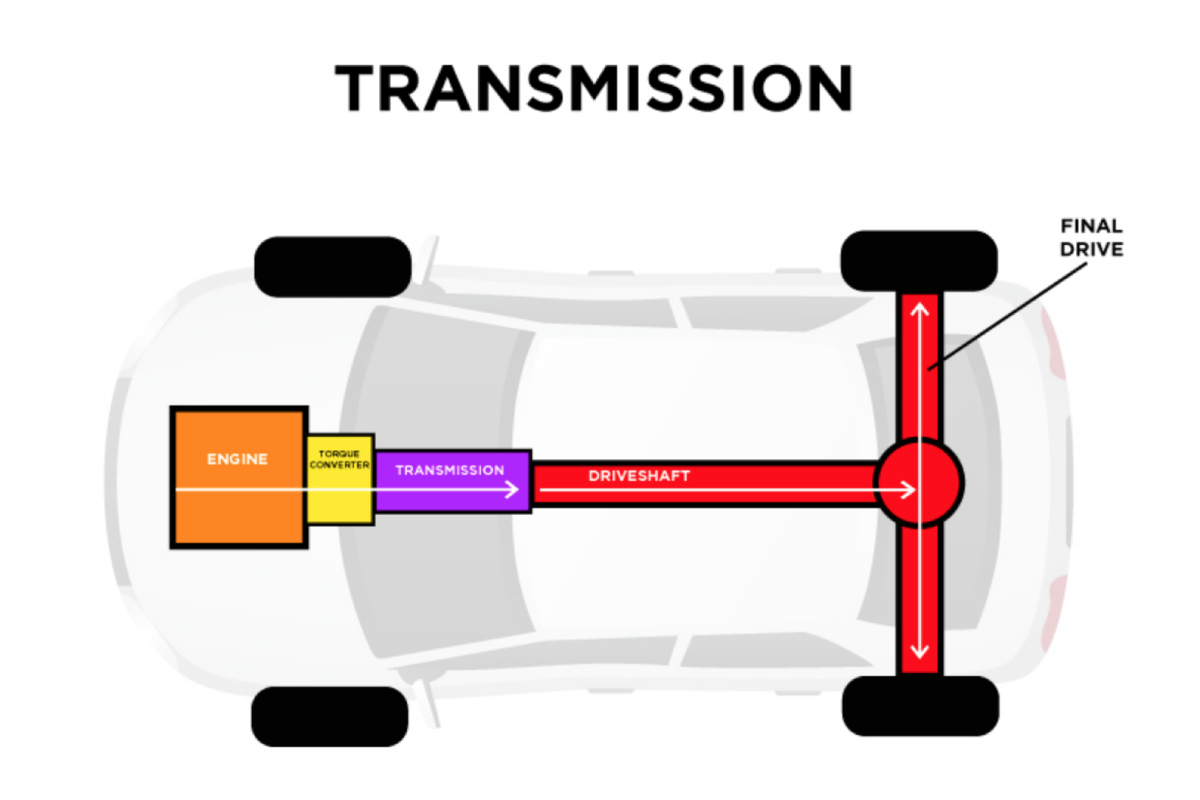
People tend to be more familiar with the term transmission than transaxle, which is why it is sometimes used as a blanket description. A transmission is a series of gears that transmits power from the engine to the wheels. The job of a transmission is to handle changing the gears and sending power to the differential through the driveshaft. The types of transmission are manual, automatic, continuously variable (CVT), or semi-automatic. Most rear-wheel-drive vehicles with a longitudinal engine will have a transmission. This engine layout creates a straight line from the crankshaft to the transmission, driveshaft, and rear differential.
How Does a Transmission Work?
Transmissions connect to the engine crankshaft via either a flywheel and clutch, torque converter, or pulley system. Transmissions usually have just one output shaft that connects to the rear axle by way of the driveshaft. While every type of transmission functions differently, they all control the speed and torque available at the drive wheels. Most transmissions, automatic and manual alike, do this with the use of gears. Continuously variable transmissions, though, use pulleys or rollers instead.
A simple way to try to understand how a transmission works is to look at a manual transmission. The transmission is connected to the engine via an input shaft and to the drive wheels via an output shaft. Gears on the input shaft move back and forth to meet the gears on the output shaft. These gears are engaged through the use of a shifter and clutch pedal. Through the gear ratios, the transmission balances both torque and speed. Lower ratios deliver more torque at lower RPMs, which help to get the car moving from a standstill. Higher ratios are used more so when driving at higher speeds to keep the vehicle moving and RPMs low. This means that you will have more wheel torque but a lower top speed in first gear but a lower wheel torque with a higher top speed in like fifth gear.
The Main Differences
Whether a vehicle has a transaxle or transmission largely depends upon the setup of its engine. Many of the main differences between these two parts overlap with the differences between transverse (perpendicular) and longitudinal (parallel) engines. Some vehicles are not suited for transaxles; for example, the added weight in the engine bay can disrupt the performance of rear-wheel-drive cars. That is why the transmission is mounted behind the engine so that it brings more of the vehicle’s weight towards the back of the vehicle. Since less weight on the driven wheels creates less traction, this layout solves that problem. This brings us to the main two differences between transaxles and transmissions, the former is usually found on FWD vehicles with a transverse engine layout while the latter is usually found on RWD vehicles with a longitudinal engine layout.
Transaxles have two output shafts that connect to the drive wheels through a pair of half shafts. Transmissions connect right to the rear axle through the driveshaft directly. While some transaxles can handle big, powerful engines, their compact design raises some engineering challenges. Usually automatic, transaxle can also be manual (not generally) or CVT (becoming more popular). Transmissions, on the other hand, have much more room for larger displacement engines as well as other modifications. On top of that, the separate rear differential on transmission systems means that it can be easily upgraded. Transmissions can be automatic, manual, CVT, or semi-automatic. So, if you want a manual performance car, it would likely be a rear-wheel-drive car with a transmission anyway.

