


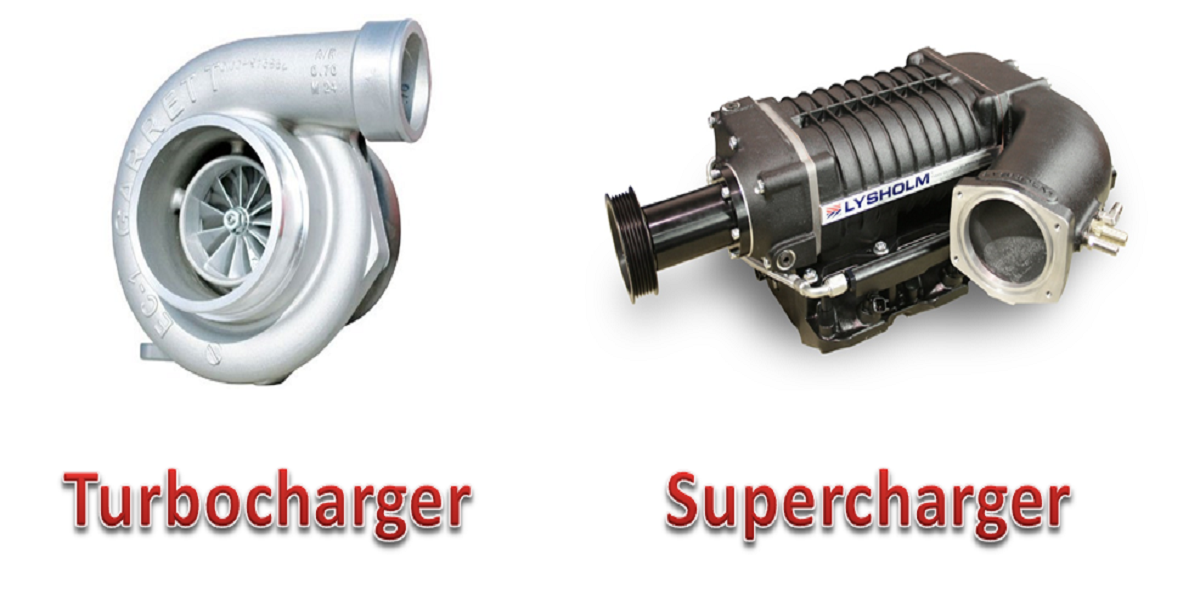
Superchargers vs. turbochargers is a car enthusiasts’ battle version of McDonald vs. KFC for fast food lovers. For so long, the conversation surrounding superchargers and turbochargers has been about finding out which one is faster, efficient, and better than the other. Most times people tend to assign their function, and how powerful they are from their names but that hasn’t always been the accurate approach. Superchargers and turbochargers are involved in the process called a forced induction process, which is a process whereby an internal combustion engine is supplied with more air than it can naturally ingest by an air compressor.
Superchargers and turbochargers are both air compressors. Normally an internal combustion engine produces power by burning fuel, and the process depends on how much air it can take. That means, for an engine to produce more power, more air is required, and more air means more efficient and quick burning of the fuel and that’s why manufacturers turned to forced induction of air.
Superchargers
Superchargers are air compressors that are mechanically connected to the engine and are driven by the engine via a belt that runs off the crankshaft as a direct energy source for the compressor. As the crankshaft spins, the supercharger spins with it since the crankshaft turns the belt that spins another pulley on the supercharger. , the spinning creates a vacuum in the cylinder, and the internal rotors connected inside the case compress the air and forces it directly into the engine. Superchargers draw their power directly from the crankshaft and since they are driven by the engine, there is no lag, they start inducing air and assisting in producing power as soon as the accelerator pedal is depressed. However this has a disadvantage, since they are driven by the crankshaft of the engine, they are actually using the energy from the car’s power source, which is like taking some money from a person that you just donated some money to.
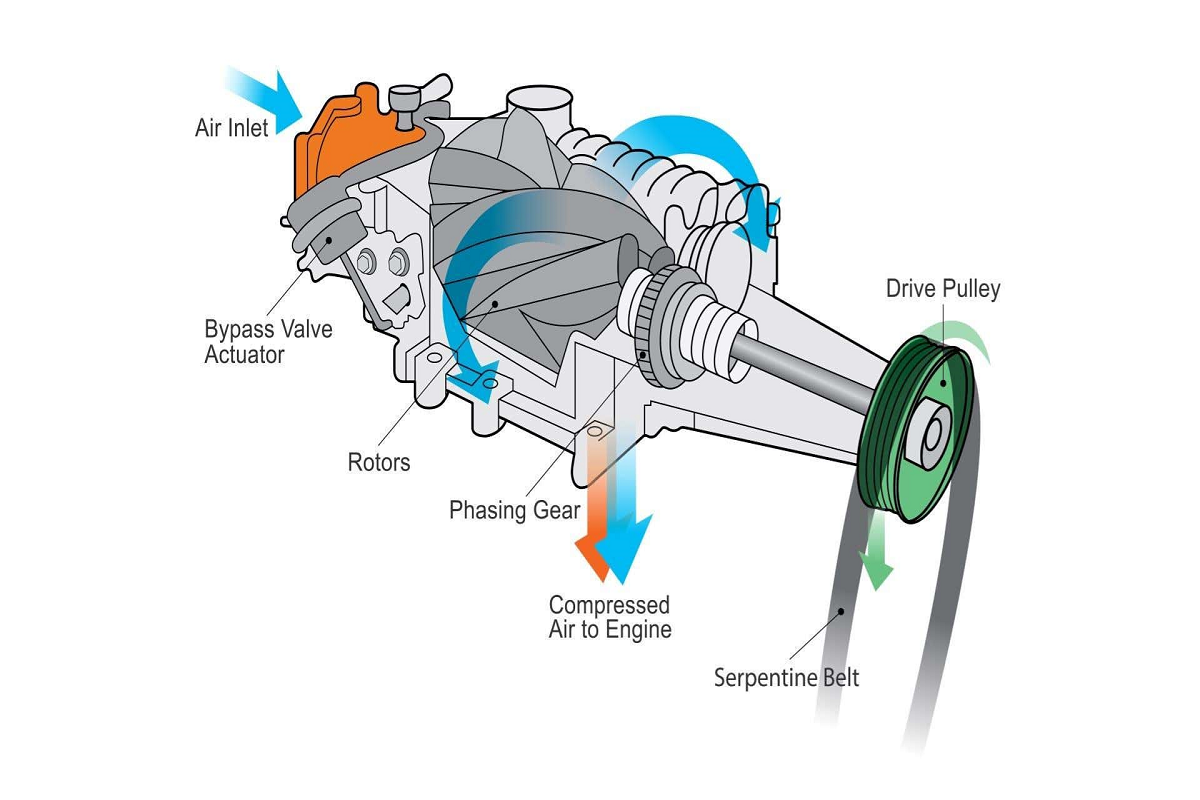
Superchargers tend to spin rapidly more than the engine in order to pressurize the air, since pressurizing air results in an increase in the density of air. A supercharger can spin at a speed as high as 50,000 to 65,000 rotations per minute (RPM). A supercharger tends to increase the performance of your engine by 30% to 50% but it can also reduce the engine’s fuel efficiency by 20%.
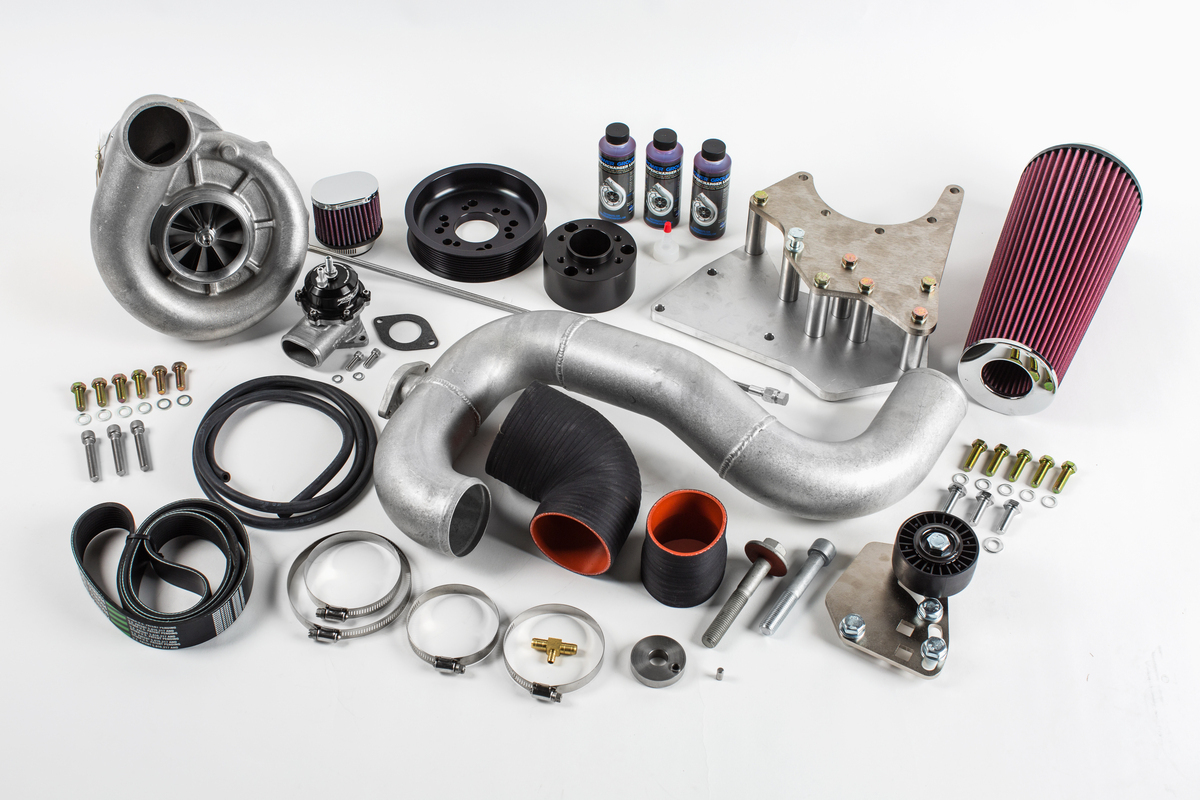
Check out these turbocharger and supercharger performance racing kits
Turbochargers
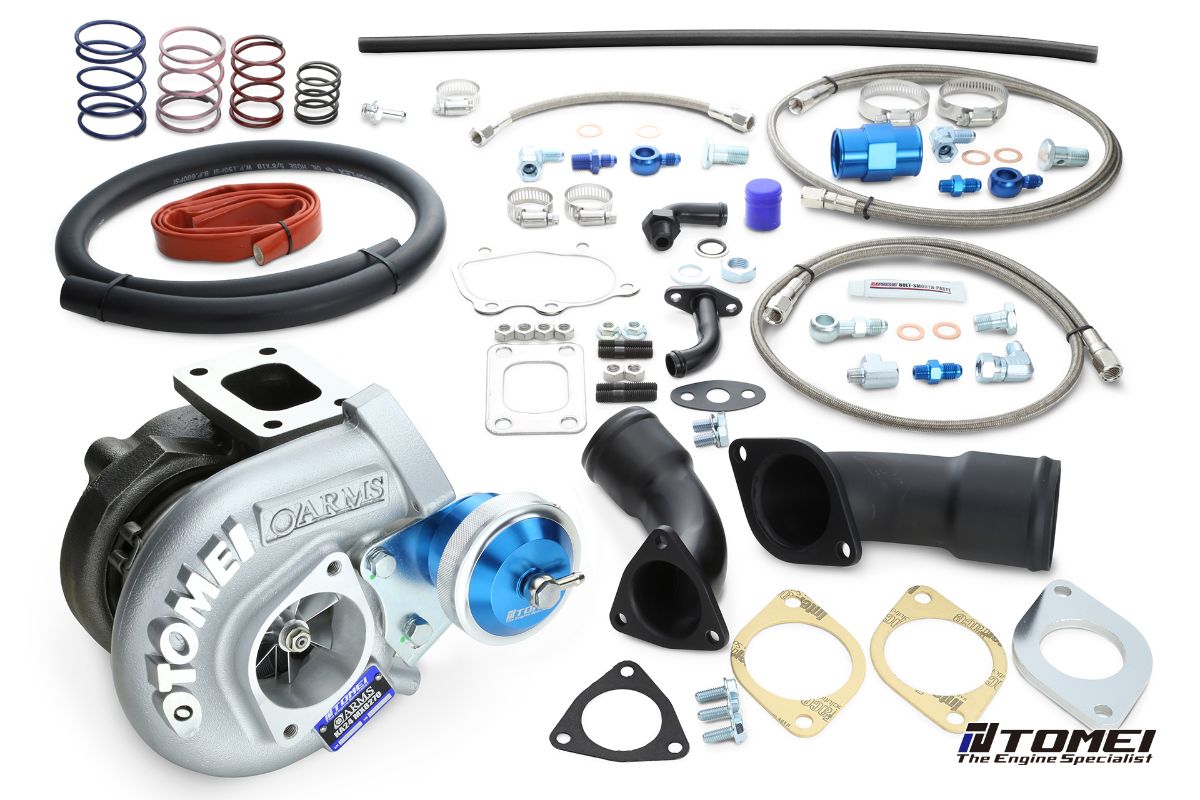
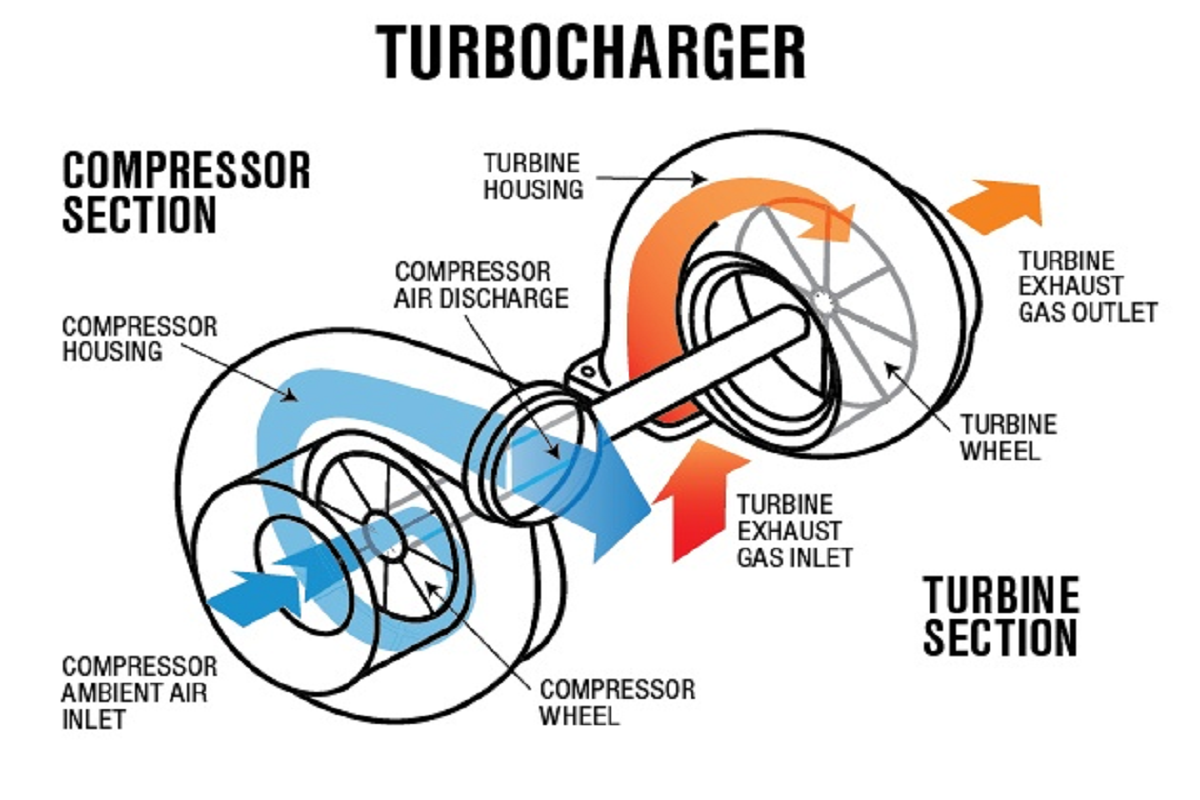
A turbocharger is an air compressor that is not mechanically connected to the engine and it uses a stream of exhaust gas from the engine to spin the turbine that powers the compressor. A turbocharger is made up of two sections: the turbine and the compressor. The turbine consists of a turbine wheel and turbine housing. The turbine housing guides the exhaust gas into the turbine wheel, and the energy from the exhaust gas turns the turbine wheel, the high-velocity spinning of the turbine wheel draws in air and compresses it. The compressed air is pushed into the engine, allowing the engine to burn more fuel to produce more power. In that way, turbochargers tend to make use of the exhaust gases.
As the engine spins faster, so does the turbine, thereby turbochargers boosting the performance of the engine by 25% to 40%. A turbocharger’s system is not instant as a supercharger’s and so the system experiences a lag when the exhaust-driven turbine takes time to spool up as the turbine keeps up with the speed for optimal boost.
The Main Difference Between Supercharger and Turbocharger
As we have seen so far, turbochargers and superchargers are two technologies with the same function; forced induction of air, but they function differently. For starters, turbochargers have lag; turbo lag is what you feel when you’re waiting for the boost to kick in. The lag comes from the time it takes the engine to create enough exhaust pressure to spin the turbo, when the car is coasting or power is not being applied, there are not enough exhaust gases to spool the turbine after depressing the accelerator pedal, it takes about a second (in most modern cars) for the turbo to spool. Superchargers however do not lag, because their air compressor is linked directly to the engine’s crankshaft, it’s always spinning and instantly responsive. The power boost it provides, and therefore the engine response you feel through the seat of your pants, increases immediately in direct proportion to how far you press the accelerator.
Fuel efficiency is one of the things that differentiate turbochargers and superchargers, While the turbo’s main setback is boost lag, the supercharger’s is efficiency. Because a supercharger uses the engine’s own power to spin itself, it siphons more power as the engine revs climb. Supercharged engines tend to be less fuel-efficient for this reason, while the same can not be said about turbocharged engines.
Another difference between superchargers and turbochargers is in gas mileage. Since the supercharger takes power from the engine to spin the turbine in order to give more air to your cylinders your mileage is going to suffer a great deal, because your engine is gonna have to get itself to move another part while the turbocharger, on the other hand, takes the compressed exhaust gases and uses them to spin the turbine and to feed the cylinders, this helps your car to get a better gas mileage, because you use already spent power (burnt fuel gas) to give the engine more punch; basically recycling your fuel after use. One should expect a turbocharged engine to be about 8% -10% more fuel-efficient than the same engine that is not turbocharged.
Power produced is another important difference, turbochargers are not as powerful as superchargers. Not only do superchargers have higher emissions compared to turbochargers, but they also have a distinct sound as they are running while turbochargers are quieter. Another difference is that a turbocharger sits off of your exhaust manifold while a supercharger is attached to your engine and spins with the crankshaft. Turbochargers on the other hand have lighter weight and they tend to be smaller than superchargers.
Superchargers vs. Turbochargers: Pros and Cons
There are several reasons why you can choose superchargers over turbochargers and vice versa but that is the choice that you get to make after knowing the pros and cons of both. Some of the things that make a supercharger better than turbochargers are; fast response, superchargers tend to provide their power boost instantly compared to turbochargers, adding a supercharger to any engine is a quick solution to boosting power. Superchargers do not lag, the power is delivered immediately because the supercharger is driven by the engine’s crankshaft. Other advantages include low RPM boost, superchargers produce good power at low RPM in comparison with turbochargers, and also when it comes to price, superchargers are a cost-effective way of increasing horsepower. Superchargers’ disadvantages include: no wastegate which means more carbon emissions, the engine runs loudly and it remains active at low RPMs and this tends to negatively impact a car’s fuel economy.
There are also several advantages of using a turbocharger instead of a supercharger. In fact, many engineers recommend a turbocharger over a supercharger because of these pros; it is highly efficient (both fuel-efficient and in the production of power). Because of the wastegate, turbocharger produces significantly fewer carbon emissions, it is also ideal in high-altitude conditions and it has lightweight and it runs quietly. Turbo’s cons include the boost lag, it also has complex installation and maintenance and it runs extremely hot and it often taps into the engine’s oil supply, this calls for additional plumbing, and is more demanding on the engine oil. Superchargers typically do not require engine oil lubrication.


This is so insightful
I always confused the two
But anyway, I feel I still prefer turbochargers
Glad you found the article insightful… I totally understand your preferences
Thank you for the comment! Turbochargers are definitely a good choice!
A very welI-written explanation comparing the supercharger with turbocharger. What a pleasure! I own two Mercedes C230 Kompressor coupes and will remain satisfied. The supercharger whine doesn’t bother me. It’s noisiest when cold and barely noticeable once the engine is warm. The engine torgue at low revs is surprising and these cars are quite fast, making them fun. However, with this vehicle fairly heavy, to get good fuel consumption I have to back off on the pedal.
Thank you for reading! We appreciate the comment! With gas being so high right now, we definitely have been trying to keep off the throttle too
Do you have supercharger for audi 4,2 v8 5 valve c5 2001 model s6.
Unfortunately we don’t 🙁
I don’t think we do. Give us a call at 480-966-3040 or shoot us an email at [email protected].